How to Prepare for a Tutoring Lesson: 10 Quick Habits
Ten small prep habits for online tutors: one goal, reused worksheets, a planned opener and a spare task, so each lesson takes less time to prepare.
By Gomently Team6 min read


You have three lessons tomorrow and one free hour to prepare all of them. The checklist advice says gather more materials. But good prep is not more material. It is fewer decisions you have to make while the student is watching you.
Here are ten small habits that cut prep time and make the lesson run better live. Each one works with whatever tools you already use.
1. Write a one sentence goal first
Before you open a single file, write what the student can do by the end. For example: "ask and answer about last weekend with the past simple."
Why it works: the goal becomes a filter. A reading text that does not serve it gets cut. A vocabulary set that drifts off topic gets cut. You prepare less, and what is left hangs together.
How to run it live:
- One to one: say the goal in the first minute. "Today you'll be able to tell me about your weekend."
- Group: write it on the board or in the chat so latecomers see it too.
Variation: offer two goals and let the student choose. Choice costs you nothing in prep and buys you a lot of motivation.
2. Reuse the worksheet you already have
Your best worksheet is a lesson waiting to be reused. Adapt it instead of rebuilding from scratch.
Why it works: you already know it works, where students get stuck and how long it takes. Changing a worksheet takes a fraction of the time of writing a new one.
How to adapt it:
- Change the names and topic: "Anna went to Paris" becomes "Carlos went to the football match" for a student who loves sport.
- Change the level: add a word bank for a weaker student, remove it for a stronger one.
- In a group, swap in topics the whole group shares.
Variation: turn the answer key into a quick warm-up quiz for the next lesson. There is a full guide in how to turn a worksheet into an interactive online activity.
3. Plan the first five minutes in detail
Most lessons that feel slow felt slow from minute one. A ready warm-up stops that.
Try three true or false sentences about the student's week, or about a short story:
- "Tom found the key in the park." (False: he found it in his bag.)
- "Tom was late for work."
- "Tom called his sister."
Why it works: true or false is fast, needs no explanation, and when a statement is wrong you can give the correct fact straight away.
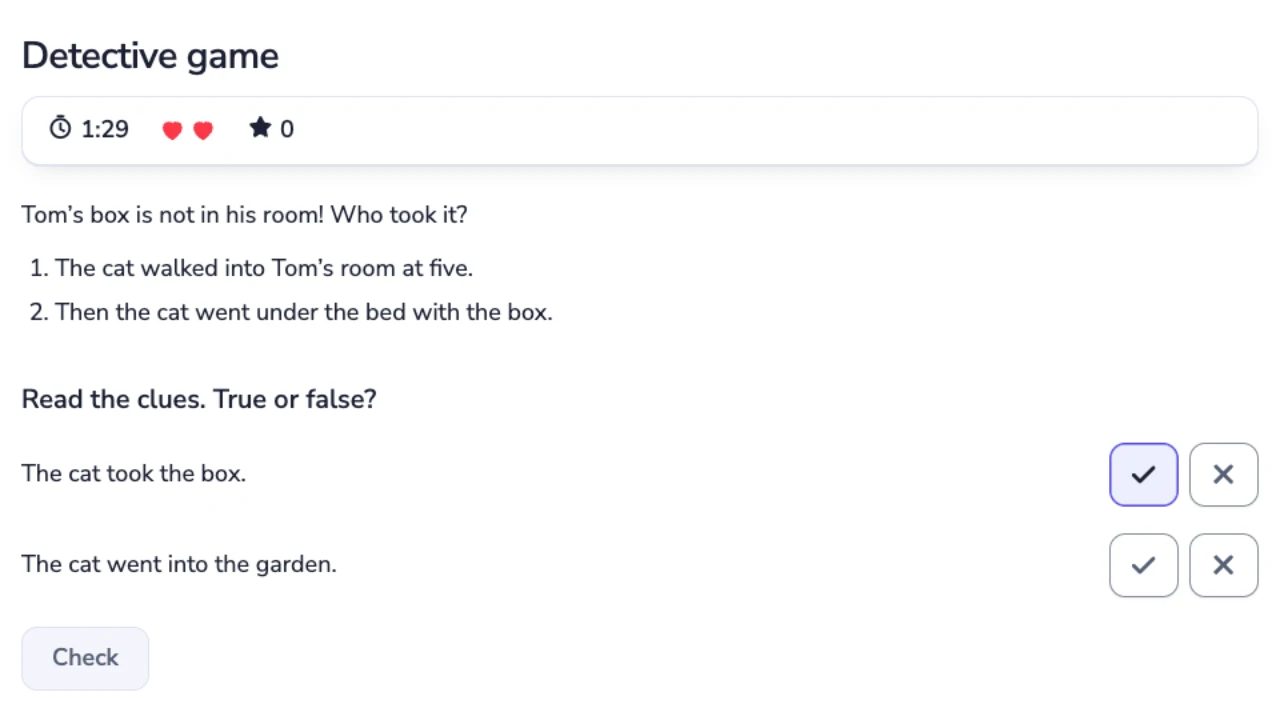
One to one, the student answers and corrects the false ones aloud. In a group, everyone writes T or F in the chat at the same time, then you reveal. More openers are in ESL warm up activities for online lessons.
Variation: start with a two minute recap of last lesson's mistakes instead.
4. Keep a spare task and a cut task
Mark two tasks in your notes before class: one extra task for when the student flies through, and one you can drop when time runs out.
Why it works: you stop improvising at the worst moment. The decision is already made.
A good spare is short and self contained, like a gap fill with a word bank: "Put the words in the gaps." A good cut task is one that is nice but not essential to your one sentence goal.
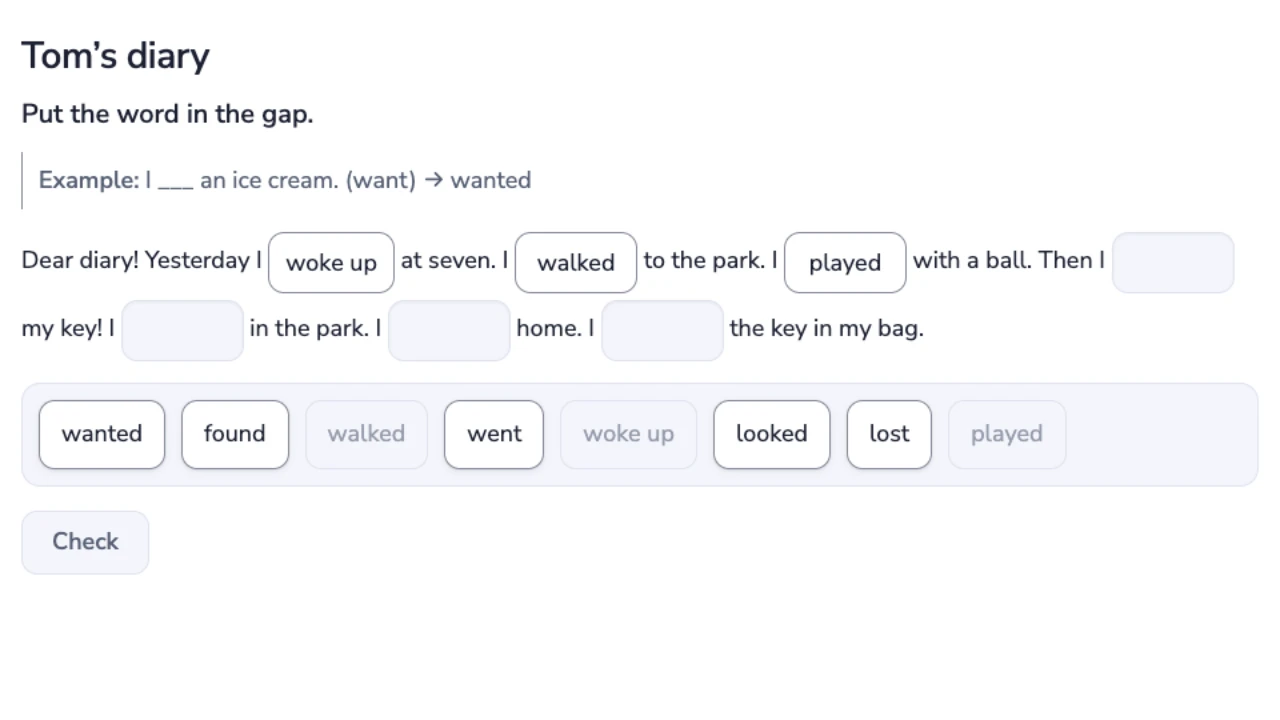
In a group, the spare task is for fast finishers while you help others.
Variation: make the spare a short game, such as finding pairs of cards with a verb and its past form.
5. Prepare from last lesson's mistakes
Right after each lesson, write down the mistakes that came up more than once. For example "he go" instead of "he goes".
Then build two minutes of practice around them:
- Gaps where the student types the form: "She ___ (go) to work by bus."
- A choice in each gap: "Choose have or has."
- Rewriting sentences in the negative, if that was the trouble spot.
Why it works: the next lesson's warm-up writes itself, and the student sees you remember them.
Variation: match each mistake to its correction, or each verb to its past form.
6. Mix one input, one practice, one speaking task
A simple frame for any lesson:
- Input: read or listen to something short.
- Practice: do a task with the target language.
- Speaking: use it in real talk.
Why it works: you never stare at a blank page wondering what comes next. You only fill three slots. The speaking part stays live with you, which is where tutoring earns its value.
Variation: for advanced students, flip it. Start with speaking, notice the gaps, then do the input and practice.
7. Click through as the student
Before class, open your materials the way the student will see them. Click every link. Play every sound. Look at the page on a phone.
Why it works: it catches broken links, missing audio and print too tiny to read on a small screen. Five minutes here saves an awkward ten in class.
In a group, remember that someone will join from a phone. Check that view too.
8. Write private notes with the questions you will ask
For each section, write two or three follow-up questions. For example: "Why did you choose went here?" or "What would change if it was every weekend?"
Why it works: you stop reading answers off a page and start teaching. Good questions are hard to invent on the spot, easy to write the night before.
In a group, add a name next to some questions so quieter students get a turn. There is more on this in how to teach online group classes.
9. Send the class link early
One link, sent the day before, with the start time written out clearly.
Why it works: no scrambling for links at the start, no "which link was it?" messages.
For a group, ask everyone to open the link a minute early to check their camera and sound. You start on time with everyone ready.
10. Batch similar lessons
If three students are working on the past simple this week, prepare that lesson once. Then make a copy for each student and adjust the names, topics or level.
Why it works: the thinking is done once. The adjusting is quick.
Variation: keep a shared bank of warm-ups sorted by level. A vocabulary recap that matches words to their meanings works for almost any topic.
How this looks in Gomently
Here is how a few of these habits look in Gomently.
Where do people live?

Which continent has the most people?
- You make a lesson by describing it in a chat, in your own words, and you can attach your own material.
- A language lesson can follow your worksheet as it is, instead of making a new lesson from it.
- While the lesson is written, you can see how Gomently understood it: the goal, the target words and the sections as they are written.
- You can click through a lesson as a student sees it before class; nothing is saved and nobody can join.
- You have private notes for the lesson that students never see.
- You can duplicate a lesson and change the copy, which suits batching.
- When you schedule a class, its link exists at once, so you can send it the day before yourself.
- Students join with one link and the name they type: no account, no email and nothing to install.
Aiko
English B1 · The lost key
Correct answers
Went well
Uses regular past forms with confidence and retold the story in order.
To practise
Irregular verbs: go, lose, find.
Built from Aiko’s answers
- 1Go, lose, find: the past
- 2Finish the story
After class, Gomently prepares a report card for each student for you: what went well, what to work on, repeated mistakes and personal homework. Each student's homework is written from the mistakes they made, ready for you to pass on. More for tutors is on the tutors page.
Try this week
Pick one habit and use it for every lesson this week. Start with the one sentence goal. Write it before you open anything else, and cut whatever does not serve it. By Friday you will notice how much less you prepare, and how much smoother the lessons feel.