ESL warm up activities for online lessons
Twelve five-minute ESL warm-ups for live video lessons, each with a setup, a levelled example, an A1–A2 version and notes for groups.
By Gomently Team6 min read


Your student logs on, says "hi", and then nothing. They are tired after work or school, the camera feels awkward, and their head is still in their own language. A good warm-up fixes that in five minutes.
What is a good ESL warm-up for an online lesson?
A good online warm-up is a short, low-stakes speaking task of about five minutes. Its only job is to switch students into English before the main lesson starts.
Each idea below has a one-line setup, an example with its level, a version for A1–A2 learners, and a note for one to one or group lessons. All you need is a camera and a shared screen.
1. Three words about my week
Setup: the student gives you three words about their week, and you ask follow-up questions about each one.
Example (B1 adult): "busy, rainy, pizza." You ask: "Why busy? Where did you eat pizza?" Three words turn into three small stories.
Low level: show six word cards with pictures on screen. The student picks three and says "I was busy" or "I ate pizza".
Group: one student gives three words, the others each guess the story behind one of them.
2. Would you rather, online edition
Setup: put two options on screen. The student picks one and gives one reason.
Example (B2 teens): "Would you rather live without music or without your phone?" Push for a real reason, not "just because".
Low level: give a frame: "I like... because...". "I like music because it is fun."
Variation: at the end of the lesson, students write their own question for next time. Teens love trying to stump you.
3. Picture of the day
Setup: share one photo and ask for three sentences about it.
Example (B1): a busy train station. "There are lots of people. A man is running. I think he is late."
Low level: point and name five things: a clock, a bag, a train.
Variation: ask "What happens next?" It brings in future forms without a grammar lecture.
4. Two truths and a lie
Setup: the student says three statements about themselves, and you guess the lie.
Example (B2): past simple stories. "I once met a famous footballer. I broke my arm skiing. I lived in Spain for a year." Ask questions before you guess.
Low level: use "I have" and "I like": "I have a cat. I like fish. I have three brothers."
Group: everyone votes for the lie in the chat at the same time, so nobody copies.
5. Odd one out
Setup: show four words. The student finds the odd one and says why.
Example (A2): apple, banana, carrot, pear. "Carrot, because it is a vegetable."
Higher level: pick sets with more than one right answer, and make the student defend theirs. "Banana, because it is the only yellow one."
Tip: take the words from the topic you teach next. The warm-up becomes a quiet preview.
6. Show me something
Setup: the student brings one object from the room to the camera and talks about it for a minute.
Example (B1 adult): a mug. Where did it come from? Who gave it? Why that one?
Low level: colour, size and one sentence: "It is my cup. It is blue. It is big."
Group: each classmate asks one question about the object.
7. Finish my sentence
Setup: you start a sentence, the student finishes it.
Example (B2): "If I had a free day tomorrow..." A natural way into the second conditional.
Low level: "My favourite food is..." or "After school I...".
Variation: swap roles. The student starts, you finish, and they correct you if your ending makes no sense.
8. Quick-fire questions
Setup: ten fast questions, one straight after another. Short answers are fine.
Example (A2 teens): "Tea or coffee? Cats or dogs? Summer or winter? Pizza or pasta?"
Higher level: every answer must be a full sentence. "I prefer dogs because they are friendly."
Why it works: there is no time for silence in the first minute, and once a student has said ten things, the eleventh is easy.
9. Draw and guess on the board
Setup: one person draws a word on a shared board, the other guesses.
Example (A2): jobs vocabulary. A stethoscope, a chef's hat, a fire engine.
Higher level: after guessing, the student defines the word: "A firefighter is a person who..."
One to one: you draw first so the student sees that bad drawings are part of the fun.
10. News in one sentence
Setup: the student shares one piece of news, from their life or the world, in one sentence, then expands.
Example (C1 adult): discuss a headline. Why does it matter? Who does it affect?
Low level: "Today I..." only. "Today I went to the dentist."
Group: collect everyone's news, then rank it by interest together.
11. Categories in sixty seconds
Setup: name as many words in a category as possible before your timer runs out.
Example (B1): things in a kitchen. Fridge, kettle, spoon, oven, sink...
Low level: allow pictures on screen as hints.
Group: everyone types in the chat at once. The longest list wins, and you read out the unusual words.
12. Mood scale
Setup: the student rates their mood from 1 to 10 and explains.
Example (B2): ban "good" and "tired". Ask for "exhausted", "relieved", "stressed" or "cheerful" instead.
Low level: choose an emoji and one adjective: "I am happy."
Bonus: it doubles as a check-in. A student at 3 needs a gentler lesson than one at 9.
When the warm-up ends, move into longer talk with these speaking activities for online ESL classes. For more on keeping a group busy, see how to teach online group classes.
How warm-ups look in Gomently
Gomently is an online classroom for tutors and schools: you describe a lesson in a chat, teach it live in a browser room, and get a report for each student afterwards. A few things that help with the starters above:
- You make a lesson by describing it in a chat, in your own words, so you can simply ask for a warm-up section at the start.
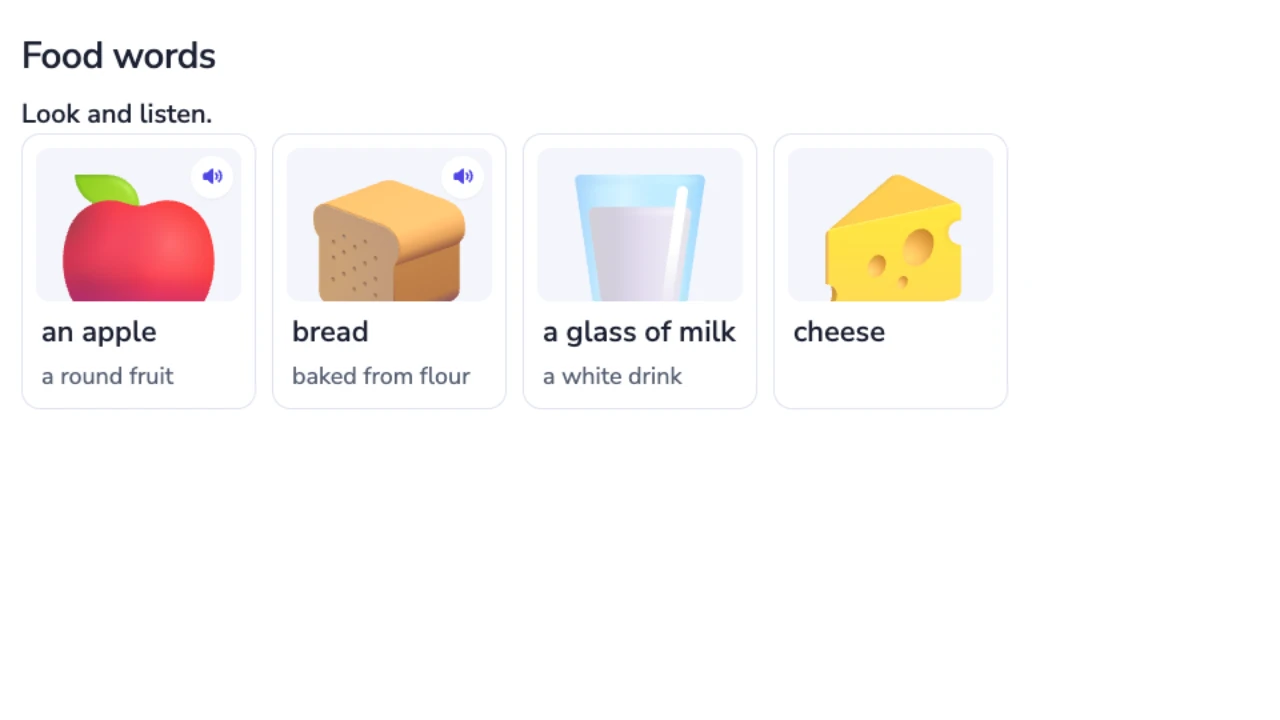
- Language lessons use ready-made tasks such as word cards, matching, multiple choice and tapping a picture.
- Speaking itself happens live with you, not as a recorded task.
- A shared board lets the whole class draw and write at the same time, which suits idea 9.
- Camera, microphone and your screen sharing are built into the class room, so there is no separate meeting link.
- The same room works for one student or a group.
- You can add one of 63 mini-games to a lesson yourself.
More for English teachers is on the English tutors page.
Try one this week
Pick one starter and use it at the start of every lesson this week. Same game, every class. By the third lesson, students will know what is coming and start talking before you finish the instructions.
FAQ
How long should an ESL warm-up be online?
About five minutes. Long enough to get students speaking, short enough to leave the lesson its time.
What warm-up works for complete beginners?
Picture naming or choosing from word cards. The student points or picks first, then says one word.
Should warm-ups link to the lesson topic?
Ideally, yes. A warm-up that uses the next topic's words previews vocabulary before you teach it.


