Speaking activities for online ESL classes with shy students
Ten speaking activities that get shy online ESL students talking on camera, each with a low-risk first step and example prompts from A1 to C1.
By Gomently Team7 min read


Your student nods, smiles, and goes silent the moment you ask a question. On camera that silence feels twice as long, for both of you. This post gives you ten speaking activities that start small and safe, so quiet students reach full sentences without freezing.
How do you get shy students to speak in an online ESL class?
Lower the risk before you raise the talking time. Give students something to say before you ask them to say it.
The camera makes every pause louder, and a shy student feels watched. What helps is preparation time, a script or a picture to lean on, and a choice of channel: typing first, then speaking. Each idea below climbs a small ladder from low risk to real speaking.
1. Chat first, then voice
The student types an answer in the chat. Then they read it aloud. Then they add one more sentence without reading.
Why it works: writing removes the blank-mind moment. By the time they speak, the words already exist.
How to run it: one to one, ask the question and wait while they type. In a group, everyone types, and you pick two answers to read aloud.
- A1: What did you eat for breakfast?
- B2: What is one habit you want to change?
Variation: the student reads a classmate's answer aloud and reacts to it: "Maria wants to sleep earlier. I want that too, because…"
2. Prepared speaking with a 60-second plan
Give one minute of silent notes, then a short talk. Keep your own camera relaxed and look at your notes too, so nobody feels stared at.
Why it works: a plan turns speaking from improvising into reporting.
How to run it: one to one, the student talks for as long as feels fine. In a group, two or three speakers per round, and listeners note one detail.
- A2: Describe your room.
- C1: Argue for or against a four-day school week.
Variation: notes are limited to five words, so students must build the sentences live.
3. Picture prompts: talk about the picture, not yourself
Show a busy scene: a market, a park, a kitchen after a party.
Why it works: attention moves off the speaker and onto the picture. Nobody is asking about their life.
How to run it: one to one, take turns naming things. In a group, go round the class, each student adds one sentence.
- A1: There is a dog. There are three children.
- B1: What happened just before this photo?
Variation: each student must spot one thing the others missed.
4. Role plays with a script that fades
Start with a full script. Next round, gaps. Last round, only cue words.
Why it works: the student always has support, and it shrinks only as confidence grows.
How to run it: one to one, you take the other role. In a group, one pair performs while the rest follow the script and spot changes.
- A2: Ordering in a café. "Can I have a…?" "Anything else?"
- B2: Returning a faulty product. "I bought this last week, and it stopped working."
Variation: swap roles, so the student asks the questions.
5. Opinion lines
Draw a line on a shared screen from "agree" to "disagree". Each student puts a mark on it, then gives one reason.
Why it works: placing a mark is a decision without words. The reason comes after the hard part is done.
How to run it: one to one, you mark too and disagree a little. In a group, ask the two marks furthest apart to explain.
- B1: Homework should be optional.
- C1: Social media does more good than harm.
Variation: each student argues the other side from their mark.
6. Pair talk with a clear task
This one is teaching advice for a group. Two students each ask one question, then report back what their partner said.
Why it works: reporting someone else's answer feels safer than talking about yourself.
How to run it: in a live group, run the pairs in turn while the others listen for one detail to repeat. One to one, you are the partner.
- A2: Find three things you both like.
Variation: the listeners guess which partner said what.
7. Sentence starters
Give the first half of the sentence. The student finishes it.
Why it works: the start is the hardest part, and you have done it for them.
B1 and B2 starters for giving opinions politely:
- I think that…
- What surprised me was…
- I see your point, but…
- In my experience…
How to run it: put the starters where everyone can see them and ask a question. In a group, each student must use a different starter.
Variation: pre-teach key words with pictures first, so students have vocabulary ready.
8. Odd one out, said aloud
Show four words or pictures. Ask which one does not belong.
Why it works: any answer is fine if you give a reason. There is no wrong choice to fear.
- A1: cat, dog, fish, chair. "The chair. It is not an animal."
- B2: freedom, honesty, table, courage. Or harder: freedom, honesty, courage, ambition.
How to run it: students can vote first, then explain. In a group, collect two different answers and let both reasons stand.
Variation: students make their own set of four for the class.
9. Retell after listening
Play a short recording or read a short text. Students retell it in three sentences, using key words you leave on screen.
Why it works: the content is given. Students only need to shape it.
- A2: A weekend story. "Yesterday Ann lost her cat. She looked in the garden. Then she found it under her bed."
- C1: A short news item, retold with one comment.
How to run it: check understanding with two quick questions first. In a group, each student says one sentence of the retell in order.
Variation: retell it from another person's point of view, such as the cat.
10. Two truths and a lie
Students prepare three statements about themselves. The others ask questions to find the lie.
Why it works: the statements are prepared, and the questions come from others, so the speaker only has to answer.
- B1: Past simple. "I visited Spain last year. I broke my arm when I was six."
- C1: The class asks follow-up questions: "How did that happen? What did you do next?"
How to run it: one to one, you play too. In a group, give students time to write their three lines first.
Variation: the liar must keep the story going for two more answers.
How these activities look in Gomently
You can run all ten ideas with any tool. Here is how they look in a Gomently class:
- Students join with one link and the name they type: no account, no email and nothing to install.
- Camera, microphone and the teacher's screen sharing are built into the class room, so there is no separate meeting link.
- Students can raise a hand and write in the class chat, which fits chat first, then voice.
- A shared board lets the whole class draw and write at the same time, which works well for opinion lines.
- Gomently can draw pictures for a lesson, ready for picture prompts.
- A recording you attach can be played to students in the lesson, with questions about it.
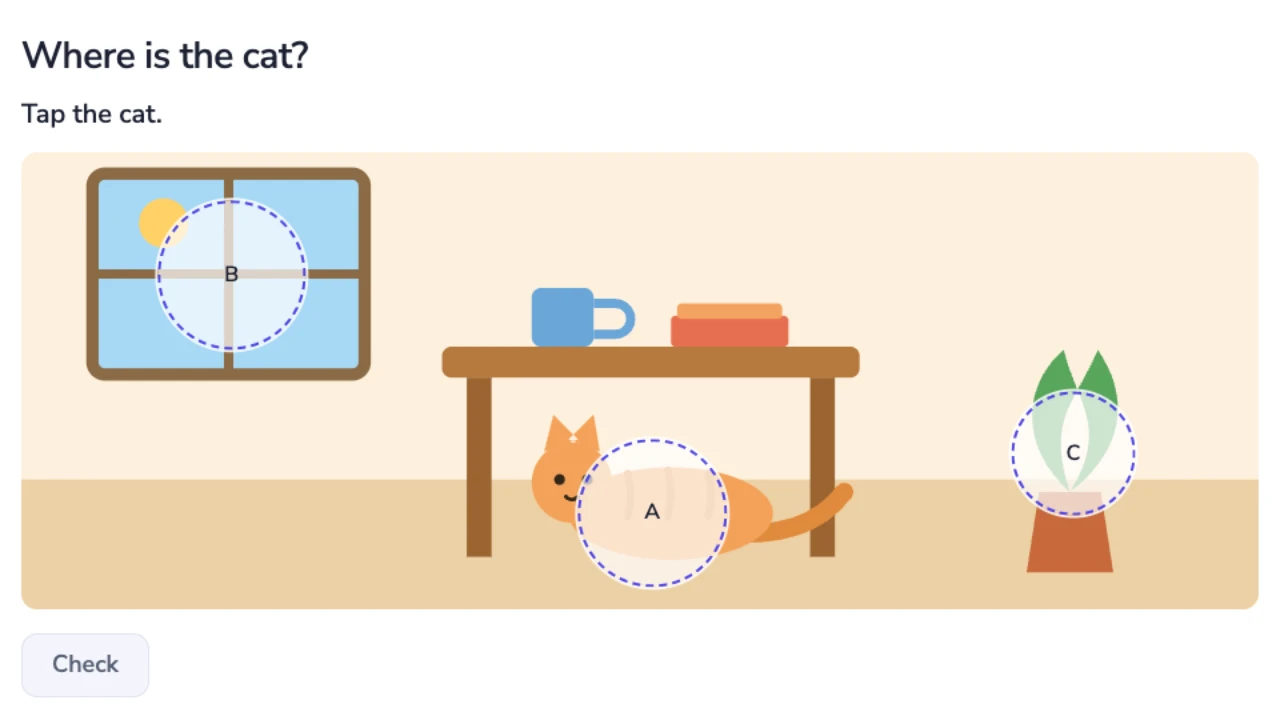
- Language lessons use ready-made tasks such as multiple choice, tapping a picture, listening tasks and word cards.
- Students never record themselves as a task: speaking happens live with you.
- The same room works for one student or a group.
LiveEnglish B1 · The lost key
Sofia
Noor
For more on groups, read how to teach online group classes where everyone works, or see the page for English tutors.
One thing to try this week
In your next lesson, use chat first, then voice for one question only. Ask, let them type, ask them to read it, then ask for one more sentence. Watch how much easier the second sentence comes.
FAQ
How long should a shy student speak at first?
Start with one sentence. Grow to two, then a short answer, then a minute. Small wins build the habit.
Should I correct mistakes while they speak?
No. Note them and correct after, in a calm moment. Interruptions teach shy students to stop talking.
What if a student keeps the camera off?
Let them start in the chat and build up. Voice comes before camera, and camera comes when they feel safe.