Halloween ESL activities for online lessons, A1 to B2
Six Halloween ESL activities for online lessons, each with an A1–A2 and a B1–B2 version. Gentle for kids, richer for teens and adults.
By Gomently Team5 min read


The Halloween ESL activities that work best online are short vocabulary tasks, a story with gaps, would-you-rather speaking and a small mystery to solve. Pitch each one to the level in front of you, and they practise real language, not just spooky words.
Halloween is a reason to talk, not a test of scary content. For young learners, keep it cosy: pumpkins, costumes, sweets and friendly cats. For teens and adults, use mystery, choice and a little suspense.
Each idea below has an A1–A2 version and a B1–B2 version, with notes for one to one and for groups. Every idea works with any online classroom.
1. Halloween vocabulary: match, sort and a crossword
A1–A2 kids. Show pictures of a pumpkin, a bat, a mask, a candle and a costume, and ask students to match each picture to its word. Then sort the words into two groups: things you wear and things you eat.
B1–B2 teens and adults. Sort spooky adjectives by strength: creepy, eerie, scary, terrifying. Then try a crossword where every clue is a short definition, such as "a building where ghosts live". In Gomently, a crossword is one of the ready-made tasks a language lesson can use.
- One to one: the student says each word aloud and uses it in a sentence.
- Group: go round the class, one sentence each.
- Variation: students describe their own costume with three of the words.
2. A spooky story with gaps
A1–A2. Write a friendly story about a cat at a Halloween party. Leave gaps for was and were and give a word bank: "The cat [was] happy. The sweets [were] on the table."
B1–B2. Write a short story about an old house at night, with typed gaps for narrative tenses: "I [was walking] home when I saw a light. Someone [had left] the door open."
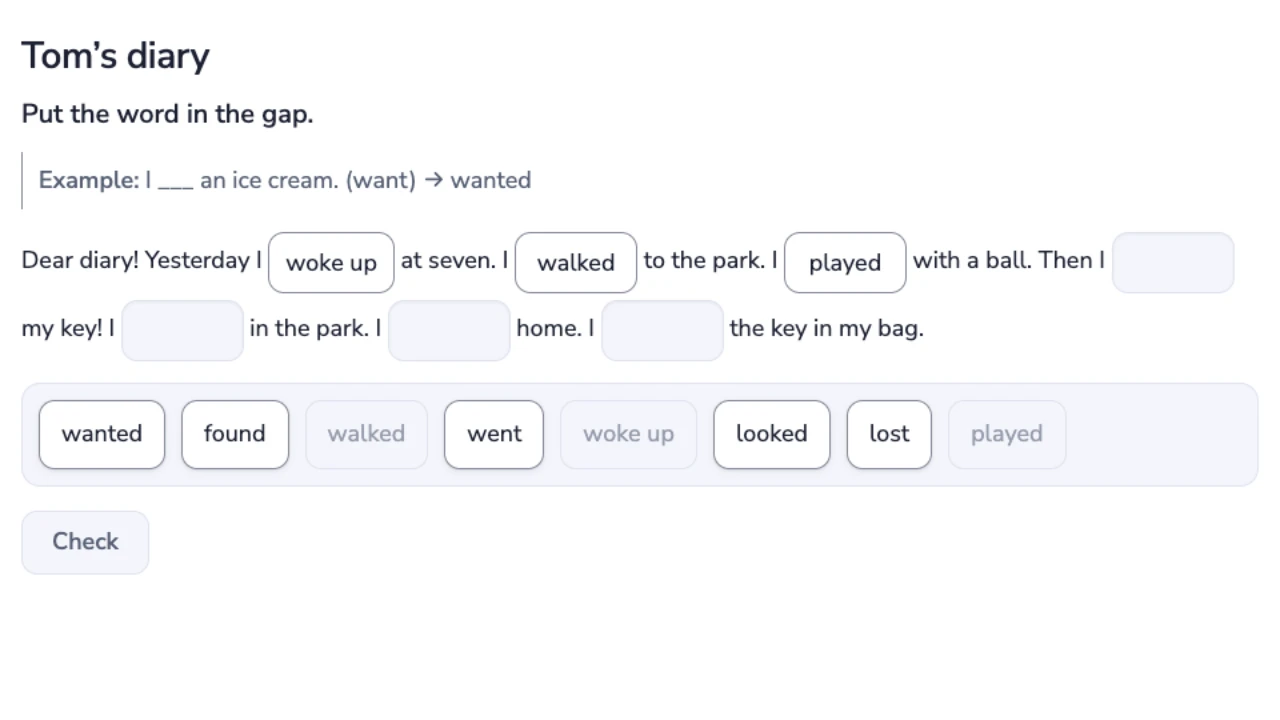
- Live: after the gaps, read the story aloud together. Stop before the last paragraph and ask students to predict the ending.
- Variation: students write the last two sentences themselves.
3. Halloween would-you-rather speaking
This one needs almost no setup, and it gets everyone talking.
A1–A2. "Would you rather be a cat or a bat?" "Would you rather eat a pumpkin or a sweet?" Give the frame: "I'd rather… because…"
B1–B2. "Would you rather spend a night in a haunted castle or a week with no phone?" Push for the second conditional and real reasons: "If I had no phone, I would…"
- One to one: you argue the other side, so the student has to defend their choice.
- Group: a quick vote, then two students defend each choice.
- Variation: students write their own would-you-rather questions for you.
4. Who ate the pumpkin pie? A mystery to solve
Build a small mystery from clue cards. Each card is a statement about a suspect, and students decide if it is true or false, then reason from the clues to the thief.
A1–A2. Use has got and colours: "The thief has got a black hat." "The cat has got a white hat." Keep the suspects friendly: a cat, a scarecrow, a little pumpkin.
B1–B2. Use modals of deduction: "It can't have been the witch, she was at the shop." "It must have been someone tall."
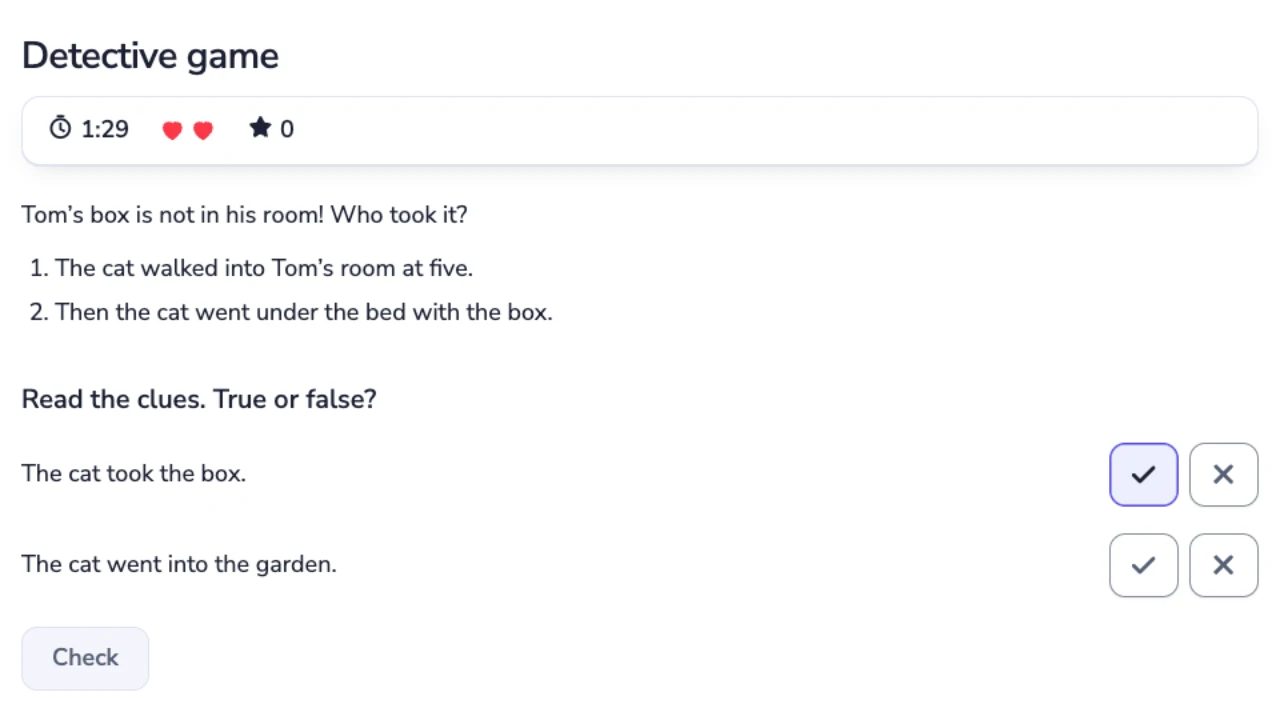
- Group: each student holds different clues and must say them aloud, so nobody can solve it alone.
- One to one: the student questions you, and you answer only yes or no.
- Variation: students invent the next suspect and an alibi.
5. Put the Halloween night in order
Give students pictures or sentences of a Halloween evening, mixed up: carving the pumpkin, putting on costumes, going trick-or-treating, counting the sweets. They put them in order.
A1–A2. Practise sequencing words: first, then, after that, finally.
B1–B2. Retell the evening with linking words, and add a twist at the end.
Variation: compare it with a festival in the student's own country. What happens first? What do people eat?
6. A Halloween game to finish
End with a short game that reuses the week's words, so the lesson closes on a high note. Keep it to a few minutes.
- A deduction game suits teens and adults: short clues, and students work out who is who.
- A word grouping game suits all levels: students find groups of words that share one rule, such as things you wear, past forms or colours. Recycle the vocabulary from activity 1.
How to keep Halloween right for each age
- Young learners: costumes, sweets, friendly monsters. No ghosts, no blood. Give an easy opt out for families who do not celebrate.
- Teens: mystery, choice and a little suspense.
- Adults: the culture and history of Halloween, and a comparison with their own traditions.
How these activities look in Gomently
In Gomently, you make a lesson by describing it in a chat, in your own words. You might write "a Halloween lesson for A2 kids, nothing scary".
Language lessons use ready-made tasks: multiple choice, filling gaps, matching, putting in order, sorting, true or false, crosswords, marking words in a text, tapping a picture, listening tasks and word cards. That covers the vocabulary, the story, the mystery clues and the Halloween night above.
You can add one of 63 mini-games to a lesson. Gomently does not put games in by itself, so you choose whether the lesson ends with one.

Four Groups
Four Groups
Mistakes left
- Things that fly
- Colours
- Past forms
- Words with ‑ing
Each student works on the lesson on their own device, while you move the class from section to section. The same room works for one student or a group.
You change a lesson by writing in the chat, for example "make the story friendlier for seven-year-olds". For more ideas beyond the season, see interactive activities for online lessons, or the page for English tutors.
Try this week
Pick one activity for your next class. The would-you-rather is the quickest to set up: write five questions and start talking.
FAQ
How do I teach Halloween to young learners without scaring them?
Keep to costumes, pumpkins, sweets and friendly animals. Leave out ghosts and blood, and keep the mystery about a missing pie.
What Halloween activities work for adult ESL students?
Mysteries with modals of deduction, would-you-rather questions with the second conditional, and a comparison of Halloween with their own traditions.
What if a student does not celebrate Halloween?
Offer an autumn theme with the same tasks: leaves, apples and warm clothes instead of costumes.